From the Classroom to Political Leadership, Public Service and a Growing Legacy of Impact
By Zaki Comr Ukpoughul Emmanuel Igbayima
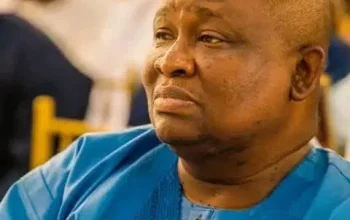
Every political journey has a beginning, but only a few journeys combine education, scholarship, intellectual development, union activism, public administration, political organisation and national leadership in quite the manner of Senator Abba Patrick Moro. From his roots in Akpali, Ugbokolo, in Okpokwu Local Government Area of Benue State, to his present position as Senate Minority Leader of the Federal Republic of Nigeria, Moro’s story is one of persistence, preparation and a long engagement with public service.
Born on July 3, 1958, to the family of Chief Moro Agbamu of Akpali, Ugbokolo, Moro began his education at LGEA Special Primary School, Odessassa, Ugbokolo, where he studied from 1963 to 1969. He proceeded to Emmanuel Secondary School, Ugbokolo, and later attended Federal Government College, Kano, where he obtained his Higher School Certificate in 1976. His early exposure to education was followed by a brief teaching career at Methodist High School, Igumale, before he embarked on the higher education that would eventually shape his career in academia, administration and politics.
Moro’s academic journey was extensive. He studied Political Science at the University of Lagos, graduating with a Bachelor of Science degree in 1980. While at the university, he served as National Secretary of the Political Science Students Association, an early indication of the leadership interests that would later become a defining feature of his career. He subsequently obtained an M.Sc from the University of Lagos in 1982 and a Master of Public Administration from the University of Nigeria, Nsukka, in 1988. In 2023, he added a PhD in Leadership and Strategic Studies from the Nigerian Defence Academy, demonstrating a continuing commitment to academic and intellectual development.
His professional journey was already taking shape before politics became his principal occupation. Following his National Youth Service, Moro served as Principal Legislative Assistant to Senator Ameh Ebute, then Chairman of the Senate Committee on Finance and Appropriation, from 1981 to 1983. The experience gave him an early understanding of legislative processes and national administration and provided an important foundation for what would decades later become his own career in the Senate.
In 1983, he joined the Benue State Polytechnic, Ugbokolo, as a lecturer in the Department of General Studies. His career at the institution progressed through several positions, including Head of Department of General Studies, Head of Department of Public Administration and Dean of the School of Business and Administrative Studies. But his influence was not confined to the classroom. In 1984, he became Chairman of the Benue State Polytechnic Senior Staff Association, and in 1986 he emerged as National President of the Polytechnic Senior Staff Association of Nigeria. His years in organised labour helped establish his reputation as a mobiliser and advocate capable of negotiating institutional and collective interests.
His transition from academia and labour activism into mainstream politics was gradual. He served as Chairman of the Governing Council of the College of Education, Oju, between 1991 and 1993, before beginning a determined pursuit of elective political office. His first attempts to become Chairman of Okpokwu Local Government were unsuccessful. He contested in 1993, 1996 and 1997, losing each time before finally winning the chairmanship in 1998.
That experience is an important part of the Moro story because it illustrates a recurring feature of his political career: persistence in the face of setbacks. Rather than abandoning the political arena after repeated defeats, he returned to the contest and eventually secured the mandate. Between 1999 and 2007, he served as elected Chairman of Okpokwu Local Government Council on two occasions and was also appointed Caretaker Chairman at different times. During the same period, he served as Chairman of the Benue State chapter of the Association of Local Governments of Nigeria, ALGON, from 1999 to 2002 and again from 2004 to 2006.
Local government leadership provided Moro with another dimension of public administration. It placed him directly in contact with communities and exposed him to the practical challenges of delivering services and managing limited public resources. It was also a period during which his political network expanded beyond Okpokwu.
In 2007, Moro sought to take his political career to the next level by contesting for the governorship of Benue State. He did not secure the party’s ticket, losing the primary election to Gabriel Suswam. Yet another political setback did not end his career. Instead, his experience and organisational abilities increasingly attracted national responsibilities.
He was appointed Director-General of Senator David Mark’s campaign organisation in 2007. In that role, he was involved in the political organisation surrounding David Mark’s successful elections and subsequent political contests, including the 2007, 2011 and 2015 elections and the 2016 rerun. The assignment strengthened his profile as a political strategist and exposed him further to national-level political operations.
His public-service career also expanded through university governance. He served as Chancellor/Chairman of the Governing Council of Michael Okpara University of Agriculture, Umudike, and subsequently as Pro-Chancellor/Chairman of the Governing Council of the Federal University of Agriculture, Makurdi. These appointments added institutional governance to a résumé that already included academia, labour leadership, local government administration and political organisation.
The next major chapter came in 2011 when President Goodluck Ebele Jonathan appointed Moro Minister of Interior. He remained in the position until the end of the Jonathan administration in May 2015. As Interior Minister, he was responsible for a ministry with oversight responsibilities involving immigration, prisons, civil defence and other internal security-related institutions. The office gave him direct experience of managing national institutions and dealing with complex security and administrative challenges.
His tenure as Interior Minister was also marked by controversy, particularly the 2014 Nigeria Immigration Service recruitment exercise, in which applicants died during overcrowded recruitment screening exercises. The incident generated widespread criticism and became one of the most difficult episodes of his ministerial career. A balanced assessment of Moro’s public life must acknowledge this chapter alongside his achievements because public leadership inevitably involves both accomplishments and controversies.
After leaving the Federal Executive Council, Moro returned to the political arena with a different objective: representing his home senatorial district. In 2019, the people of Benue South elected him to the Senate of the Federal Republic of Nigeria. His election represented another stage in a career that had moved from the classroom to the local government council, from the state and federal executive to the national legislature.
In the Ninth Senate, Moro served as Chairman of the Senate Committee on Federal Character and Intergovernmental Affairs and as Deputy Chairman of the Committees on Army and Inter-Parliamentary Affairs. These positions placed him within committees dealing with important questions of national administration, security and inter-parliamentary relations.
He was re-elected in 2023, returning to the Tenth Senate with a renewed mandate from Benue South. His responsibilities expanded further when, in November 2023, he was elected by the Senate Minority Caucus as Minority Leader. The position transformed his role from being principally a constituency representative into one of the most prominent opposition voices in the Nigerian Senate.
As Minority Leader, Moro’s responsibilities extend beyond Benue South. He participates in national debates, provides leadership to the minority caucus and contributes to scrutiny of government policies and programmes. At the same time, he continues to represent the interests of the people of Benue South, creating a dual responsibility that requires him to balance local expectations with national political obligations.
Perhaps the most interesting feature of Moro’s political evolution is the variety of institutions through which he has served. He has been a teacher, university student leader, lecturer, academic administrator, union leader, legislative aide, local government chairman, ALGON leader, university council chairman, political strategist, federal minister and senator. Each stage exposed him to a different dimension of governance. The classroom introduced him to education and intellectual development; union leadership taught him negotiation and collective advocacy; local government brought him closer to grassroots administration; ministerial office exposed him to federal executive power; and the Senate placed him within the legislative branch of government.
That breadth of experience has influenced the way his supporters describe his representation of Benue South. His office’s seven-year record in the Senate points to interventions in education, healthcare, electricity, roads, bridges, water, agriculture, youth and women empowerment, security and community development. Beyond constituency projects, his legislative agenda has included efforts associated with the Federal University of Health Sciences, Otukpo, the North Central Development Commission and other institutional and constitutional proposals.
His impact, however, should not be measured solely by the number of positions he has occupied or projects associated with his representation. The more enduring question is whether the institutions he has helped create, the policies he has advocated and the projects he has facilitated continue to serve the people after political attention has moved elsewhere. That is the standard by which every public servant’s legacy is ultimately judged.
For many of his supporters, Moro’s greatest political asset has been persistence. He lost local government contests before eventually winning. He lost a governorship primary but continued to rise through public service. He left the Federal Executive Council and later returned to national politics through the Senate. In 2023, rather than simply returning as an ordinary senator, he emerged as leader of the Senate minority caucus.
His journey therefore offers a broader lesson about political careers: setbacks do not necessarily mark the end of a political journey. Sometimes they become stages in preparation for greater responsibilities. Moro’s career has been characterised by repeated transitions, each building upon the experience of the previous one.
From the classrooms of Ugbokolo and Kano to the lecture halls of the University of Lagos; from the offices of Benue State Polytechnic to the negotiating tables of organised labour; from the local government council in Okpokwu to the governing councils of universities; from the Federal Ministry of Interior to the floor of the National Assembly, the journey has covered an extraordinary range of public institutions.
Today, Senator Abba Moro occupies a position that combines his local roots with national responsibility. As representative of Benue South and Senate Minority Leader, he remains connected to the communities from which his political journey began while operating on one of Nigeria’s most important national political stages.
The story of Abba Moro is therefore not simply the story of a man who became a senator. It is the story of a long preparation for public leadership, marked by education, professional experience, political contests, setbacks, appointments and electoral victories. His supporters see the journey as evidence of resilience and commitment to service, while his broader public record provides material for assessing the successes and controversies that have accompanied his career.
From Akpali to the Red Chamber, the journey continues. And as the years ahead unfold, the ultimate measure of Abba Moro’s political legacy will be determined not merely by the offices he has occupied, but by the institutions strengthened, the opportunities created, the communities transformed and the people whose lives have been positively touched by his years in public service.
Jija-Bokoti Media
August 2026