By Jija-Bokoti Media
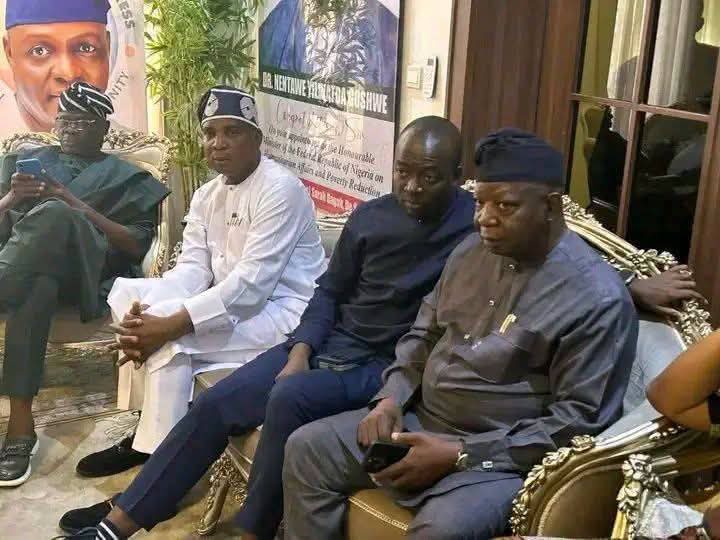
A significant political engagement has taken place at the national level as the Labour Party governorship candidate in Benue State, Dr. Mathias Terwase Byuan and the Labour Party candidate for the Ado/Okpokwu/Ogbadibo Federal Constituency, Hon. Philip Agbese, joined a delegation of Benue State political stakeholders on a courtesy visit to the National Chairman of the All Progressives Congress (APC), Prof. Nentawe Yilwatda
The meeting has attracted attention within political circles because of the identities of the participants and the broader political developments unfolding in Benue State ahead of the 2027 general elections. Rather than viewing political engagement exclusively through the prism of party affiliation, the meeting presents another dimension of democratic politics one in which dialogue, relationship-building and the pursuit of common interests can take place across political boundaries.
Dr. Mathias Byuan and Hon. Philip Agbese have both become prominent figures in the emerging political configuration ahead of 2027. Byuan, a former APC member, has moved to the Labour Party and emerged as its governorship candidate in Benue State, while Agbese, the serving member representing Ado/Okpokwu/Ogbadibo Federal Constituency and Deputy Spokesperson of the House of Representatives, also secured the Labour Party ticket for another term after his defection from the APC.
Against this background, their appearance alongside Benue APC stakeholders at the residence or office of the APC National Chairman is politically significant. It underscores the increasingly fluid nature of Nigerian politics, where party differences do not necessarily eliminate opportunities for dialogue, consultation and engagement among political actors.
For Benue State, such engagements could have implications beyond the immediate personalities involved. The state is already witnessing considerable political activity as parties, aspirants and stakeholders position themselves for the 2027 elections. The interaction between political actors operating on different platforms may therefore be interpreted as part of the broader consultations and relationship-building that traditionally precede major electoral contests.
Prof. Nentawe Yilwatda, as National Chairman of the ruling APC, occupies a strategic position within Nigeria’s political architecture. His engagement with Benue stakeholders provides an opportunity for discussions concerning the political future of the state, national development, the interests of Benue people and the need to maintain constructive relationships among political leaders.
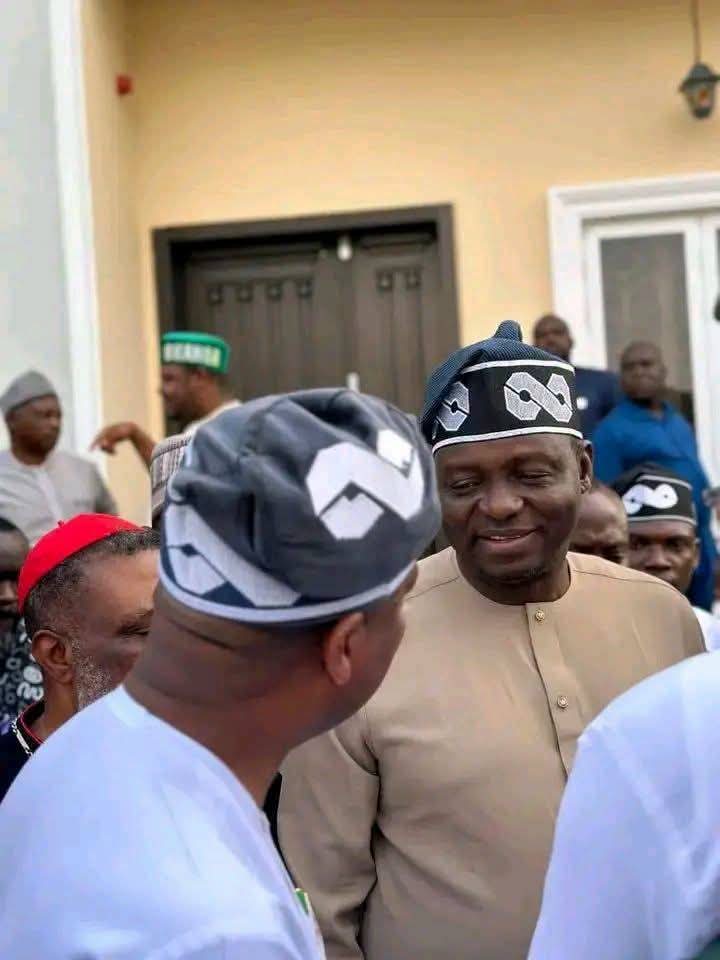
The participation of Byuan and Agbese is equally noteworthy. Both men have demonstrated that their political journeys are evolving, and their current positions within the Labour Party place them among the personalities expected to shape the political conversation in Benue ahead of 2027. Their engagement with senior APC figures could therefore be viewed as an indication that political relationships and channels of communication remain important even when individuals belong to different political parties.
It is also important to distinguish political engagement from political alignment. A courtesy visit, by itself, does not necessarily mean that any participant is changing political affiliation or abandoning an existing political platform. Rather, it can provide an avenue for stakeholders to exchange views, strengthen relationships, discuss issues affecting their communities and explore areas of mutual interest.
The development is particularly relevant in Benue, where political competition has historically been intense and where the 2027 elections are already generating considerable interest. With major political parties expected to mobilise extensively across the state’s 23 local government areas, interactions among influential stakeholders will continue to attract public attention.
Dr. Byuan’s political trajectory has itself become an important part of the unfolding story. He left the APC in May 2026 and subsequently pursued the Labour Party governorship ticket. At the time, he made it clear that he was no longer an APC governorship aspirant, while also publicly expressing support for President Bola Ahmed Tinubu’s re-election bid.
Hon. Philip Agbese’s political movement has similarly generated interest. After leaving the APC, he secured the Labour Party ticket to represent the Ado/Okpokwu/Ogbadibo Federal Constituency in 2027. Reports indicate that he was affirmed as the Labour Party candidate following a direct primary in which more than 52,000 votes were recorded across the three local government areas.
Their presence at the meeting therefore adds an interesting layer to the political narrative. It suggests that while electoral competition remains central to democratic politics, political actors can still maintain channels of communication and engagement with leaders outside their immediate party structures.
For observers of Benue politics, the development will likely generate questions about what the engagement could mean for the state’s political future. However, responsible reporting requires that such questions remain within the realm of political analysis until the participants themselves provide further clarification on the substance and outcome of their discussions.
What is clear is that political engagement is intensifying ahead of 2027. Across Nigeria, stakeholders are already holding consultations, building alliances, strengthening networks and reassessing political strategies. Benue is no exception, and the meeting involving Byuan, Agbese, Benue APC stakeholders and the APC National Chairman offers another indication of the level of political activity surrounding the forthcoming elections.
Beyond the immediate political calculations, the engagement also reinforces an important principle of democracy: political differences should not prevent dialogue. In a diverse democracy such as Nigeria, political actors may compete during elections while still maintaining relationships and engaging one another on matters of common interest.
As the 2027 political season gradually gathers momentum, Benue will continue to witness more meetings, consultations and strategic engagements involving politicians across party lines. Whether these engagements eventually translate into formal alliances, issue-based cooperation or simply stronger channels of communication remains to be seen.
For now, the courtesy visit to Prof. Nentawe Yilwatda represents an intriguing moment in Benue’s evolving political landscape—a meeting that places party differences alongside the broader need for dialogue, consultation and strategic political engagement.
Jija-Bokoti Media will continue to monitor developments as political activities intensify ahead of the 2027 general elections.