BY Comr. Mkosoga Daniel Iorhen
Introduction
Agriculture is one of the most important sources of livelihood, employment, food and income in Nigeria. This is particularly true in North Central Nigeria, comprising Benue, Kogi, Kwara, Nasarawa, Niger and Plateau States, as well as the Federal Capital Territory. The region is widely regarded as one of Nigeria’s major food-producing areas, with farmers producing crops such as yam, cassava, maize, rice, soybeans, sorghum, vegetables and other food and cash crops.
Despite its agricultural potential, farmers in North Central Nigeria face numerous challenges that limit productivity and threaten their livelihoods. Recent evidence shows that insecurity, climate shocks, high production costs, inadequate financing, poor infrastructure, weak market access and limited access to modern agricultural technology are among the major constraints affecting Nigerian farmers.
Addressing these challenges requires coordinated efforts by government, financial institutions, agricultural organisations, researchers, private investors and the farmers themselves.
Major Challenges Facing Farmers
- Insecurity and Farmer-Herder Conflicts
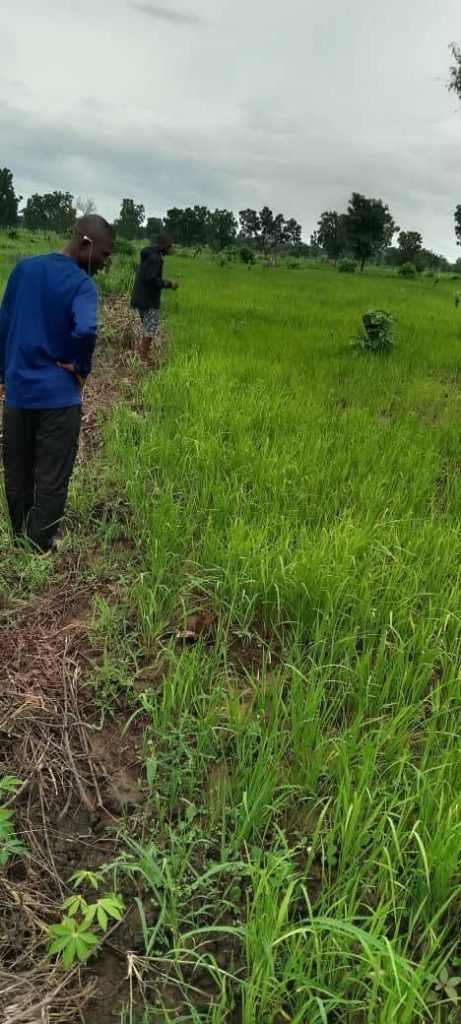
Insecurity is one of the most serious challenges confronting farmers in parts of North Central Nigeria. Conflicts, banditry, kidnapping and farmer-herder disputes can prevent farmers from accessing their farms, destroy crops and livestock, displace farming communities and discourage investment in agriculture.
FAO has identified persistent conflict and violence as factors eroding resilience in North Central states such as Benue, Nasarawa, Niger and Plateau. More broadly, recent World Bank analysis indicates that conflict has become an increasingly important contributor to agricultural losses in parts of North Central Nigeria.
Possible solution: Governments should improve security in farming communities and establish effective early-warning and conflict-resolution mechanisms. Farmer-herder dialogue committees can help resolve disputes before they become violent. Grazing and farming arrangements should be clearly defined, while communities should be involved in developing locally appropriate land-use agreements.
- High Cost and Limited Availability of Farm Inputs
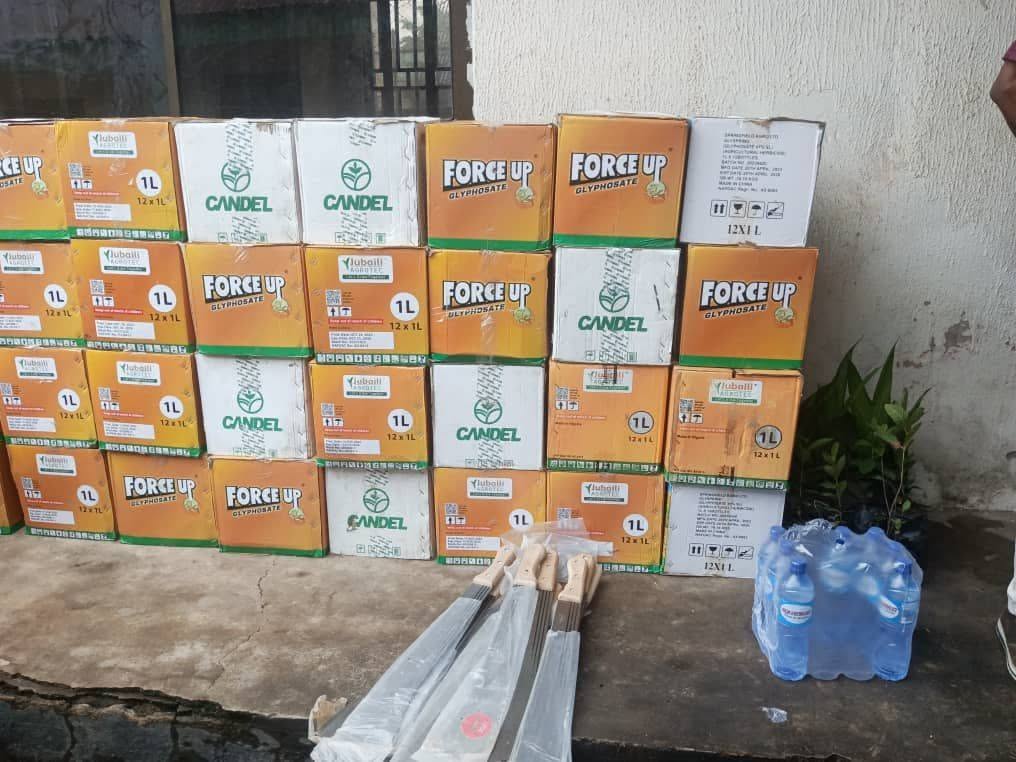
The cost of seeds, fertilisers, pesticides, herbicides, machinery and other agricultural inputs has increased considerably. Many smallholder farmers cannot afford the quantities they need, resulting in low application of improved inputs and reduced yields.
The problem is significant enough that the National Agricultural Development Fund launched an input-support programme in 2026 targeting 20,160 smallholder farmers across Niger, Benue, Nasarawa and Kwara States.
Possible solution: Government and private-sector suppliers should improve access to affordable and genuine inputs through transparent subsidy programmes, farmer cooperatives and local distribution centres. Input support should be targeted at genuinely active farmers, with digital registration and monitoring used to reduce diversion.
- Climate Change and Unpredictable Weather
Farmers in North Central Nigeria largely depend on rainfall. Changes in rainfall patterns, floods, droughts, excessive rainfall, prolonged dry spells and rising temperatures can therefore have serious effects on agricultural production.
Recent research shows that climate-related shocks are a major contributor to crop losses in Nigeria. Farmers in North Central Nigeria also report difficulties in adapting because of inadequate technical support, limited climate information, poor access to inputs and institutional constraints.
Possible solution: Farmers should be supported to adopt climate-smart agriculture. This includes drought- and flood-tolerant crop varieties, improved soil management, agroforestry, mulching, conservation agriculture, crop diversification and efficient irrigation. Farmers also need timely and understandable weather information to guide decisions about planting, fertilisation and harvesting.
- Limited Access to Finance and Credit

Many smallholder farmers lack sufficient capital to purchase inputs, hire labour, acquire machinery or expand their farms. Commercial loans may be difficult to obtain because of high interest rates and collateral requirements.
Possible solution: Financial institutions should develop agricultural loan products designed specifically for smallholder farmers. Agricultural credit should have reasonable interest rates and repayment periods that reflect farming cycles. Cooperative-based lending, credit guarantees, crop insurance and warehouse-receipt financing can also improve access to capital.
- Poor Infrastructure and Transportation
Poor rural roads make it difficult and expensive for farmers to transport fertilisers to farms and crops to markets. During the rainy season, some rural roads become nearly impassable. Poor electricity and storage facilities also contribute to post-harvest losses.
Nigeria’s agricultural sector continues to face problems involving transportation, storage, cold-chain infrastructure and post-harvest losses.
Possible solution: Governments should prioritise the construction and maintenance of rural roads, bridges, irrigation systems, electricity infrastructure and agricultural storage facilities. Public-private partnerships could be used to establish warehouses, processing centres and cold-storage facilities close to major farming communities.
- Poor Market Access and Unstable Prices
Farmers often struggle to obtain fair prices for their produce. When markets are far away or farmers lack storage facilities, they may be forced to sell immediately after harvest when prices are low. Middlemen can also capture a significant portion of the value generated by farmers.
Possible solution: Farmer cooperatives should be strengthened so that farmers can aggregate their produce and negotiate better prices. Governments and private companies should promote contract farming and establish reliable commodity markets. Better storage facilities would allow farmers to delay sales until market conditions improve.
- Inadequate Mechanisation and Modern Technology
Many farmers still depend heavily on manual labour and simple farm tools. This limits the area they can cultivate and increases production costs. Access to tractors, planters, harvesters, irrigation equipment and processing machinery remains inadequate.
Possible solution: Agricultural mechanisation centres should be established in strategic locations across North Central Nigeria. Rather than requiring every smallholder farmer to purchase expensive machinery, farmers should be able to rent equipment at affordable rates through cooperatives and mechanisation service providers.
- Weak Agricultural Extension Services
Farmers need regular access to extension officers who can teach them improved production techniques, pest management, soil conservation, climate-smart agriculture and post-harvest practices. However, inadequate numbers of extension workers and limited resources reduce the effectiveness of agricultural advisory services.
Research on climate-smart agriculture in Nigeria has identified inadequate extension services, capital and equipment as barriers to farmers’ adoption of improved practices.
Possible solution: Governments should recruit and train more extension officers. Digital extension services using mobile phones, radio and farmer-focused applications can complement traditional extension visits, particularly in remote communities.
- Land Tenure Problems
Unclear land rights can discourage farmers from making long-term investments in irrigation, soil improvement, tree planting and other measures that increase land productivity. Small farm sizes can also limit the ability of farmers to achieve economies of scale.
A 2026 study of smallholder farmers in North Central Nigeria found that farm size, education and farming experience were among factors significantly associated with household food-security outcomes.
Possible solution: Land administration should become more transparent and accessible. Farmers should have stronger tenure security, while policies should encourage responsible land consolidation, cooperative farming and long-term investment in agricultural land.
Broader Solutions for Agricultural Development
Solving these problems requires more than providing fertiliser once a year. A comprehensive agricultural development strategy should include:
- Improved security: Protect farmers, farming communities, markets and transportation routes.
- Affordable agricultural finance: Expand low-interest loans, insurance and credit guarantees.
- Climate-smart agriculture: Promote improved seeds, irrigation, soil conservation and climate information.
- Better infrastructure: Invest in rural roads, storage facilities, electricity, irrigation and processing centres.
- Stronger cooperatives: Help farmers purchase inputs collectively and market their produce collectively.
- Mechanisation services: Make tractors and other machinery available for hire at affordable rates.
- Improved extension services: Increase farmer training and access to agricultural information.
- Better market systems: Connect farmers directly with processors, wholesalers, retailers and institutional buyers.
- Youth and women empowerment: Provide land, training, finance and technology to young people and women involved in agriculture. A recent study specifically recommends more equitable access to land, education, credit, improved inputs and extension services for vulnerable groups, including women and less-experienced farmers.
- Value addition: Encourage processing of crops such as cassava, yam, rice, maize, tomatoes and soybeans within the region rather than selling most produce in raw form.
Conclusion
Farmers in North Central Nigeria have enormous potential to contribute to food security, employment creation and economic development. However, insecurity, climate change, expensive inputs, inadequate finance, poor infrastructure, weak markets, limited mechanisation and insufficient extension services continue to restrict this potential.
The solution is to move from short-term interventions to a comprehensive and sustainable agricultural development system. Government should provide an enabling environment, while financial institutions, private investors, research institutions, farmer organisations and development partners contribute technology, finance, training and market opportunities.
If these measures are implemented effectively, North Central Nigeria can strengthen its position as one of Nigeria’s major food-producing regions. More importantly, farmers will be able to increase their productivity and income while building greater resilience against climate, economic and security shocks.
